Series 1 · Story 01
Melchizedek
The Mystery of the King and Priest
He appeared without warning, blessed Abraham, and vanished from the story. Centuries later, David and the writer of Hebrews pointed back to him to explain who Jesus is.
Melchizedek
Brad Copp
Watch
Melchizedek: The Music Video
The full story of the king and priest of Salem, from Genesis 14 to Psalm 110 and Hebrews 7.
Words to remember
The Song
A prestigious manSuddenly appeared one dayTo bless AbrahamFor his righteous ways
Abraham chosen by GodFor his faithfulnessMade father of nationsHis heart was selfless
Chorus
King of peaceA man without beginningGod's High priestA man without endKing of righteousnessWorthy of respectThe man of mysteryIs MelchizedekIs Melchizedek
Abraham's knees buckledAt the sight of the kingOffering his richesA tenth of everything
The high priestBrought bread and wineA gift from the LordHis presence was divine
Chorus
King of peaceA man without beginningGod's High priestA man without endKing of righteousnessWorthy of respectThe man of mysteryIs MelchizedekIs Melchizedek
He was never ChristNever claimed to beHe was a foreshadowOf what the world would see
Chorus
King of peaceA man without beginningGod's High priestA man without endKing of righteousnessWorthy of respectThe man of mysteryIs Melchizedek
MelchizedekMelchizedek
Meet them
The People in This Story
Melchizedek
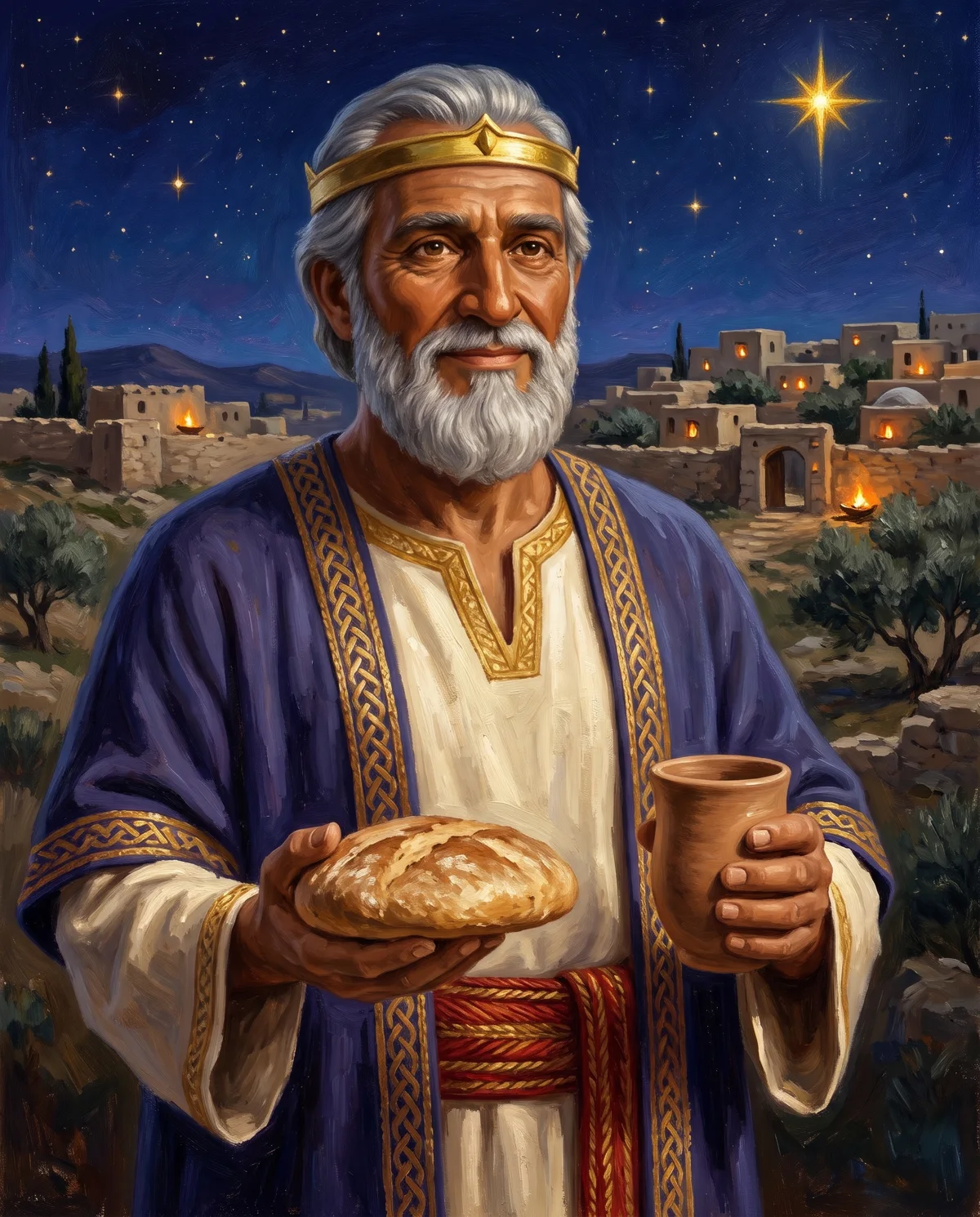
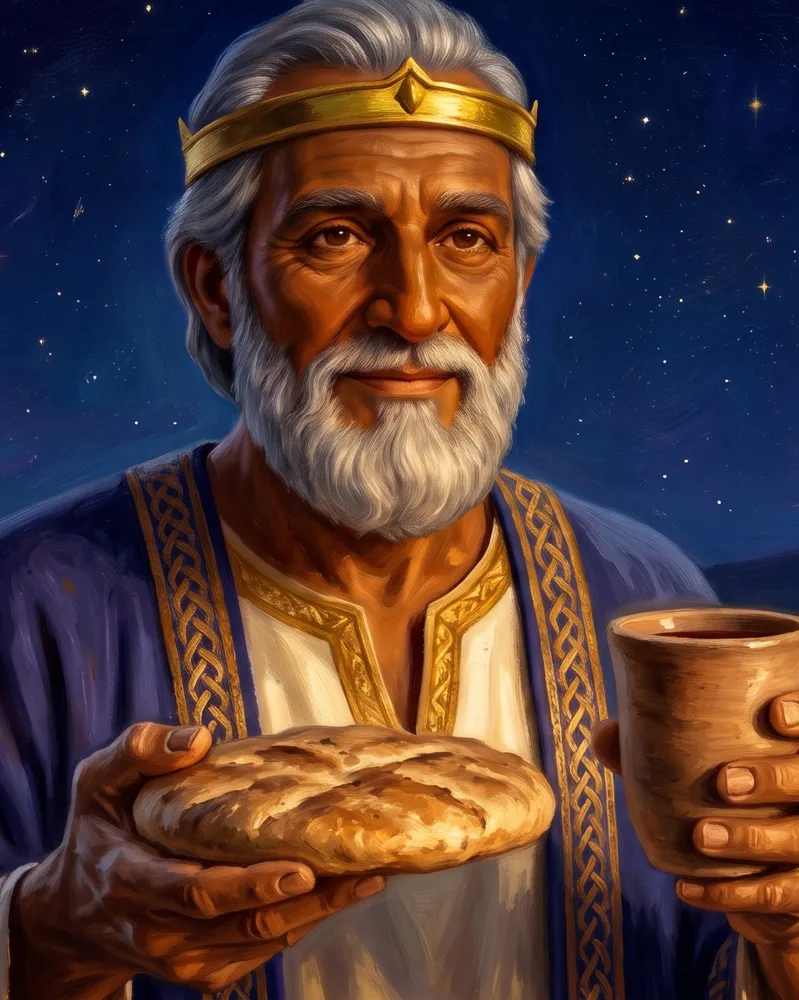
King of Salem and priest of God Most High
He meets Abram after the battle, brings bread and wine, blesses him, and receives a tenth of everything. Scripture records no family, no birth and no death.
Genesis 14:18-20
Abram
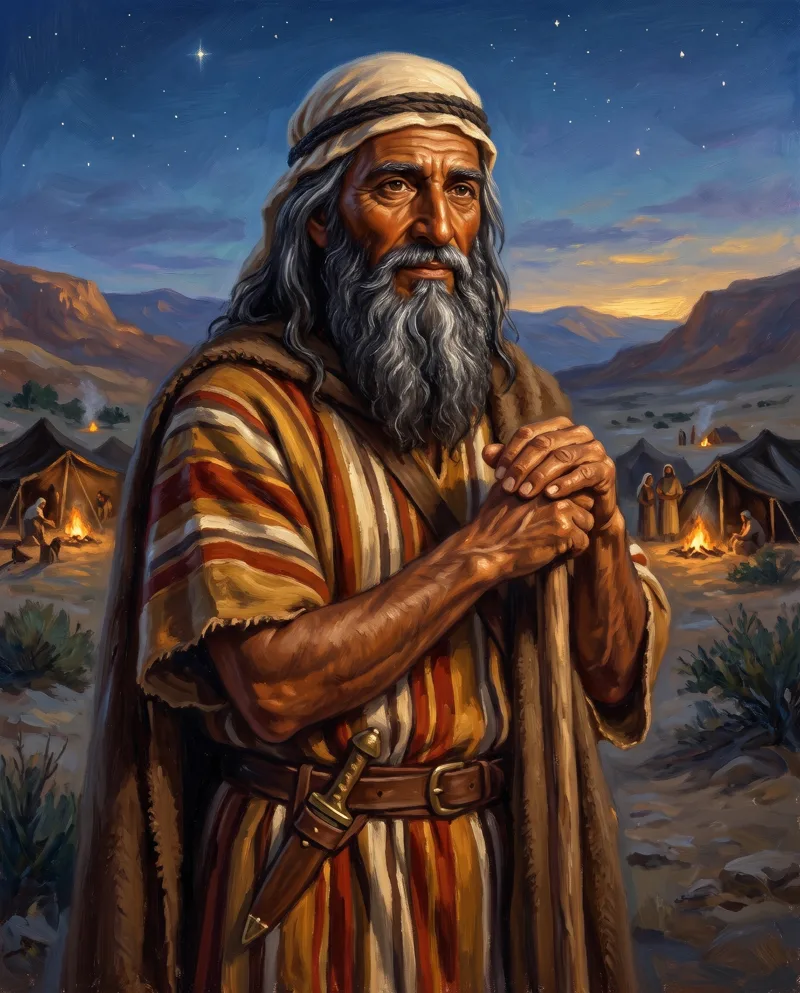
Later called Abraham, the man God called
He has just rescued his nephew Lot and everyone taken captive. He bows before Melchizedek, gives him a tenth, and refuses any reward from the king of Sodom.
Genesis 14:14-24
Go deeper
The Bible Study
Melchizedek: The Mystery of the King and Priest
A Bible Study on the Man Who Appeared Without Warning and Whose Priesthood Would Last Forever
Introduction: A Man Unlike Any Other
There are people in Scripture whose stories unfold over several chapters, whose families are recorded, and whose accomplishments are carefully documented. Then there is Melchizedek.
He appears suddenly in the book of Genesis, meets one of the most important men in biblical history, blesses him, receives a tenth of his possessions, and then disappears from the biblical narrative.
No recorded birth. No recorded death. No recorded ancestry. No recorded beginning or end to his priesthood.
Yet hundreds of years later, King David writes about him in the Psalms, and centuries after that, the writer of Hebrews uses him to explain one of the greatest truths about Jesus Christ.
Who was this mysterious man? Why was he both a king and a priest? And why does the Bible connect his priesthood to the eternal priesthood of Jesus?
To understand Melchizedek, we must look beyond his brief appearance in Genesis.
1His Sudden Appearance in Scripture
Primary Scripture: Genesis 14:17-20
Melchizedek first appears after Abram (later called Abraham) returns from rescuing Lot and defeating the kings who had taken him captive.
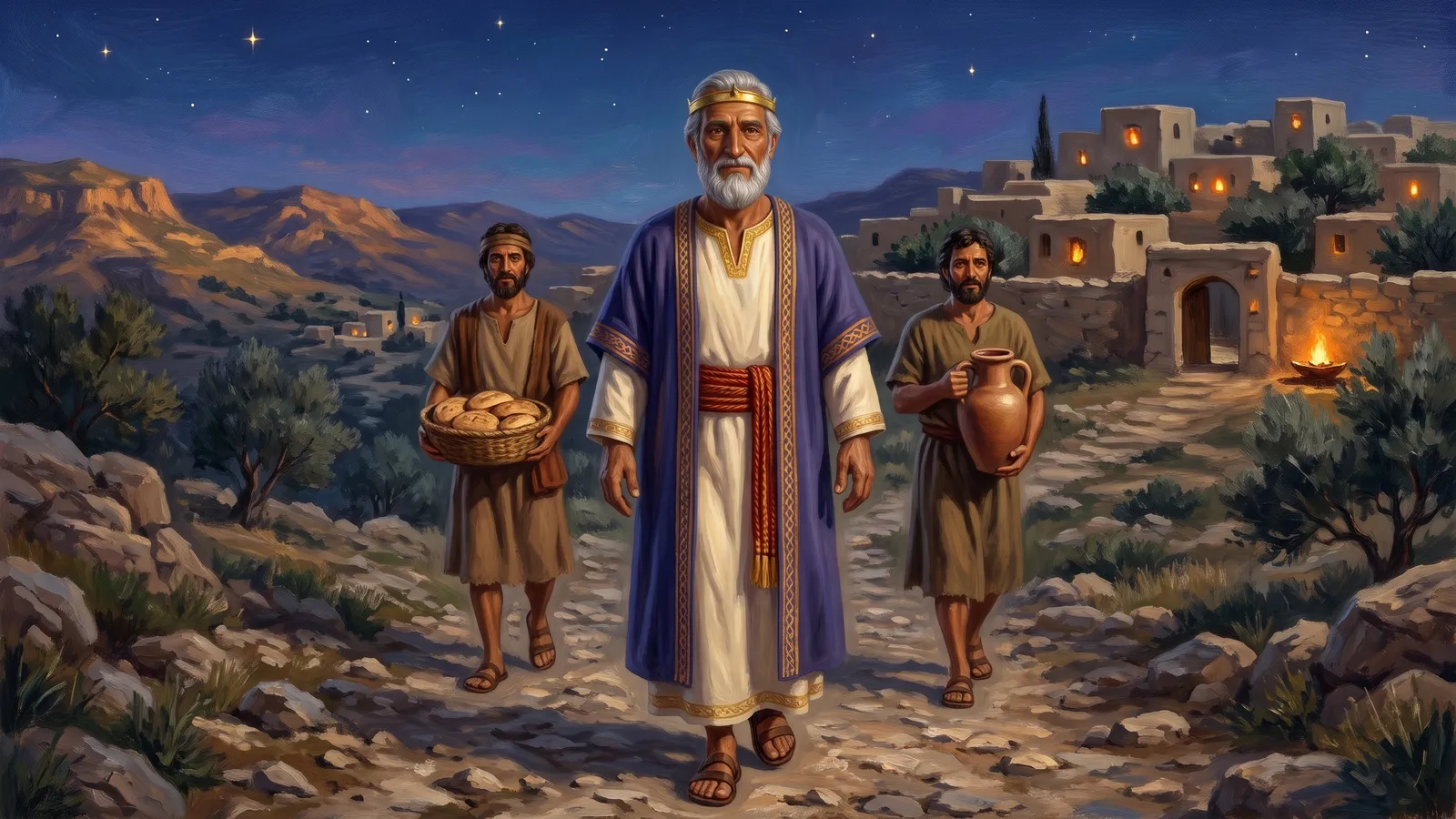
As Abram returns victorious, two kings come out to meet him: the king of Sodom, and Melchizedek, king of Salem.
But Melchizedek is different from the other kings.
And Melchizedek king of Salem brought forth bread and wine: and he was the priest of the most high God.
Genesis 14:18, KJV
Consider what Scripture reveals about this man.
- He was a king.
- He ruled over Salem.
- He was a priest of God Most High.
- He brought bread and wine to Abraham.
- He blessed Abraham.
- Abraham gave him a tenth of everything.
This is a remarkable encounter because Melchizedek holds two positions that would later become central to the biblical story: king and priest.
2What Does the Name Melchizedek Mean?
The name Melchizedek comes from Hebrew. It is generally understood as meaning King of Righteousness.
- Melek means king.
- Tzedek relates to righteousness.
He is identified as the king of Salem. The name Salem is associated with peace and is commonly connected with Jerusalem.
First being by interpretation King of righteousness, and after that also King of Salem, which is, King of peace.
Hebrews 7:2, KJV
Notice the order: King of righteousness, then King of peace. These titles are especially significant when we consider the character and authority of Jesus Christ.
Melchizedek's titles point toward themes that find their ultimate fulfillment in Christ.
3The Meeting Between Abraham and Melchizedek
Primary Scripture: Genesis 14:18-20
One of the most important details of this encounter is that Abraham recognizes Melchizedek's spiritual authority.
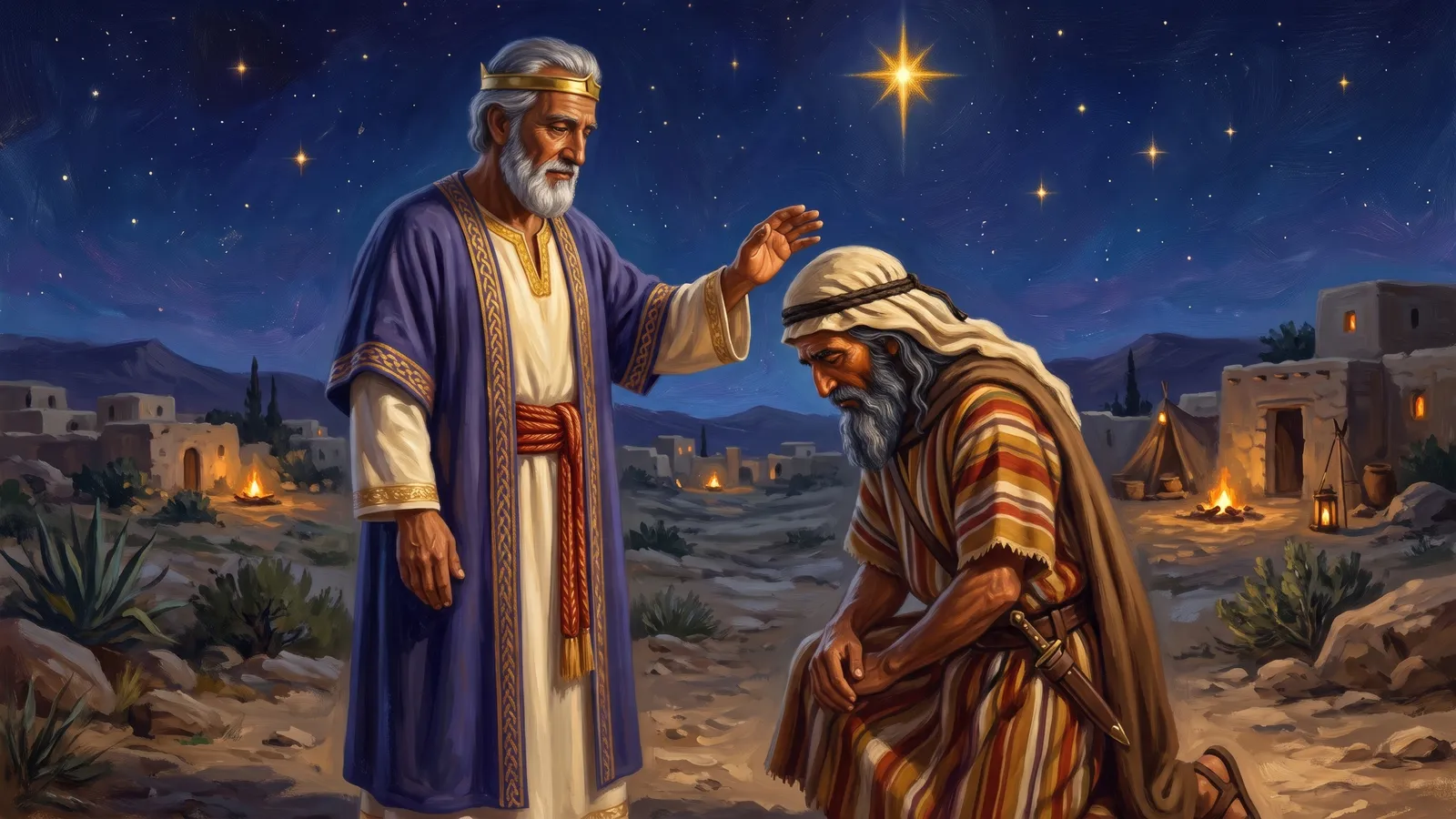
Blessed be Abram of the most high God, possessor of heaven and earth.
Genesis 14:19, KJV
He then praises God for delivering Abraham's enemies into his hands. Abraham responds by giving Melchizedek a tenth of everything. This is significant for several reasons.
First, Melchizedek blesses Abraham.
And without all contradiction the less is blessed of the better.
Hebrews 7:7, KJV
The writer of Hebrews uses this encounter to establish the superiority of Melchizedek's priestly order over the Levitical priesthood.
Second, Abraham gives him a tenth. This is an early biblical example of giving a tenth to a priest of God Most High.
Third, Abraham acknowledges the God Melchizedek serves. Melchizedek does not take credit for Abraham's victory. He gives the glory to God.
4Was Melchizedek Actually Jesus Christ?
He was a historical king and priest who served as a foreshadowing of Christ.
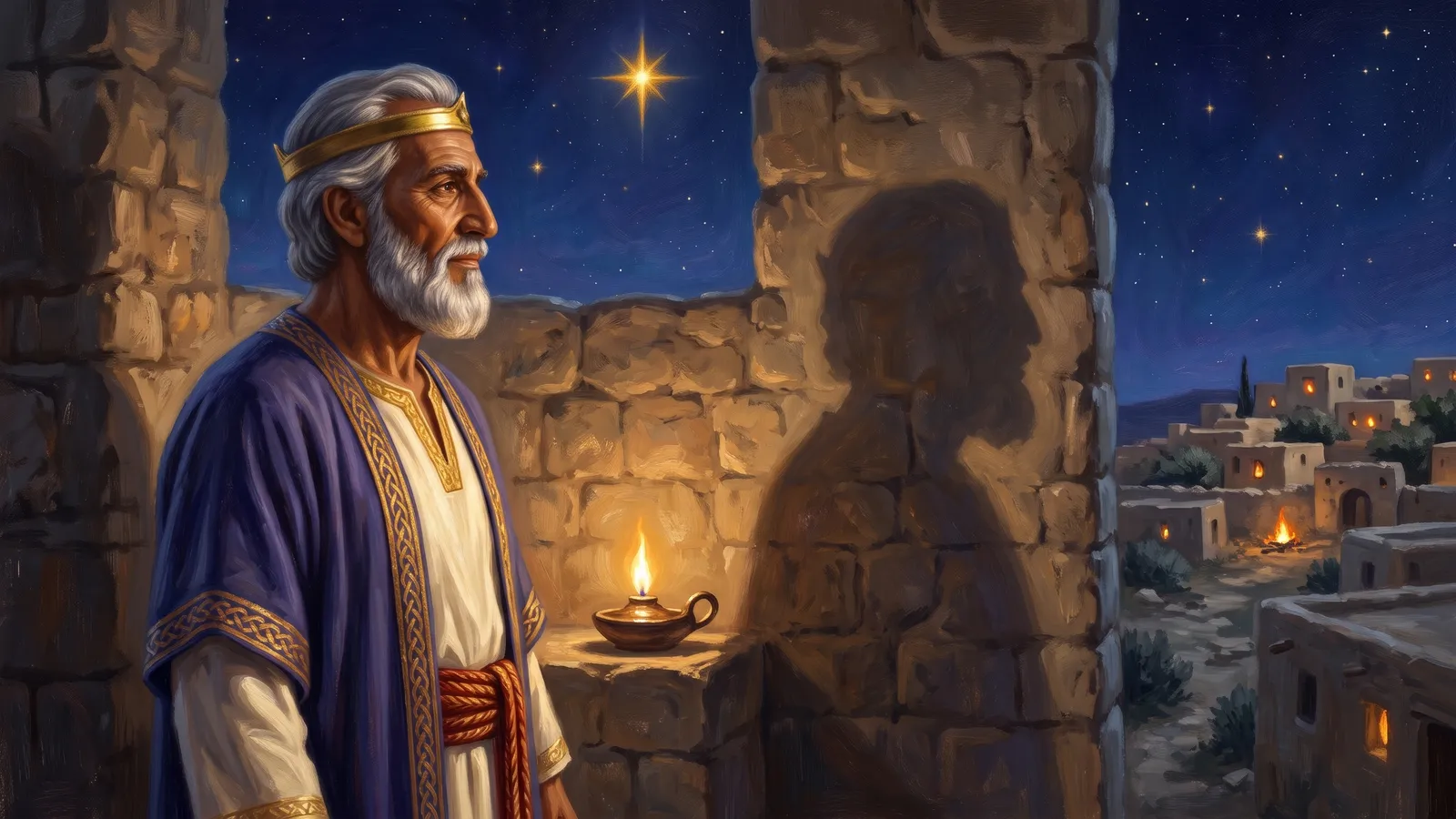
What does Scripture actually tell us?
Without father, without mother, without descent, having neither beginning of days, nor end of life; but made like unto the Son of God; abideth a priest continually.
Hebrews 7:3, KJV
This verse led many to believe that Melchizedek was actually Jesus Christ. However, notice the wording: he was made like unto the Son of God. The passage does not explicitly identify Melchizedek as Jesus.
A strong interpretation is that Melchizedek was a real historical figure whose presentation in Scripture serves as a picture of Christ.
His genealogy, birth, and death are not recorded. This is particularly important because genealogies were central to establishing priestly qualifications under the Mosaic Law. The writer of Hebrews uses that absence to illustrate a priesthood that is not established by recorded ancestry or limited by a recorded death.
We should distinguish between what Scripture says and what we might speculate.
5The Bread and Wine: A Significant Detail
Primary Scripture: Genesis 14:18
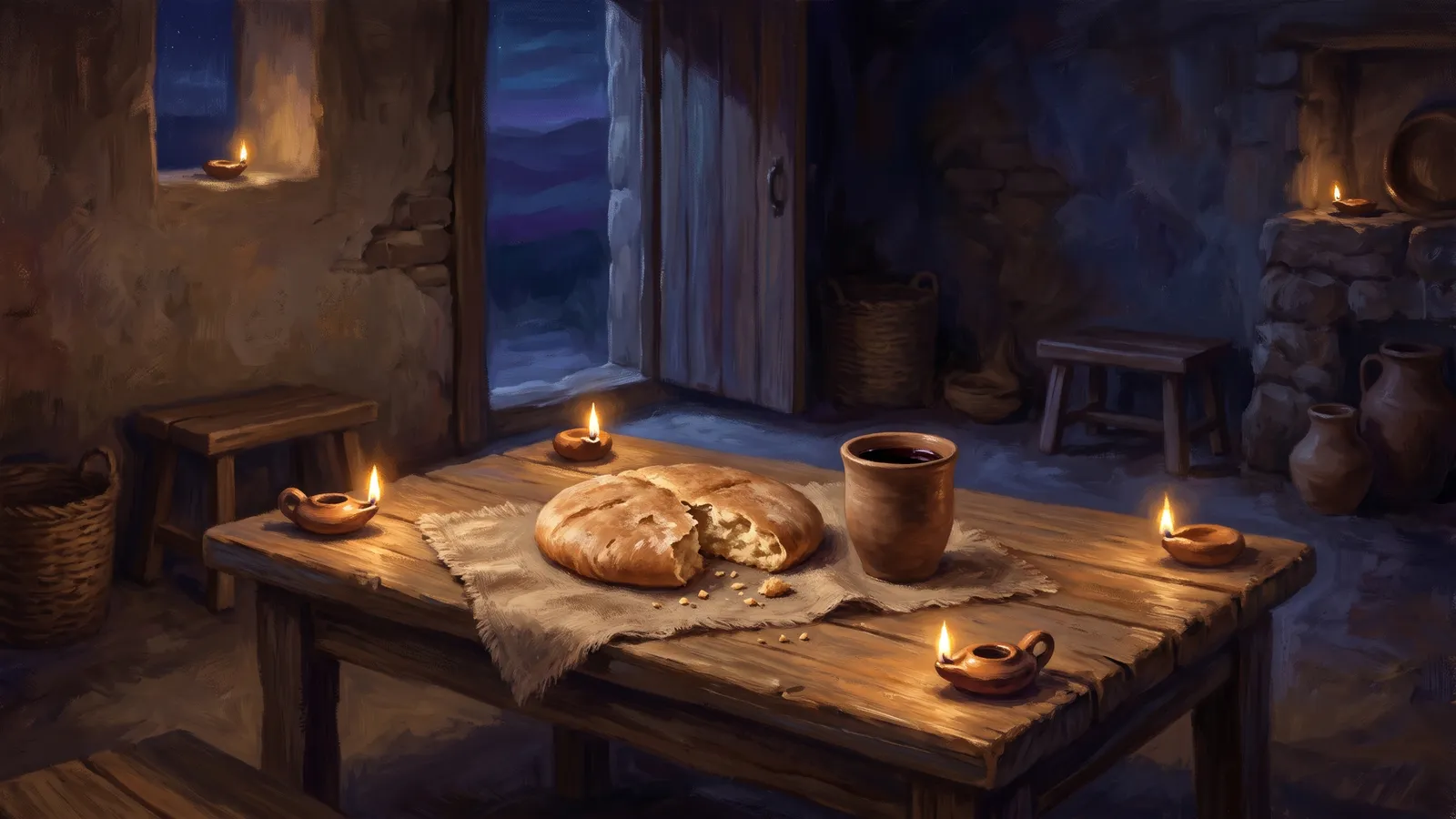
Why did Melchizedek bring bread and wine? Scripture does not specifically explain his reason.
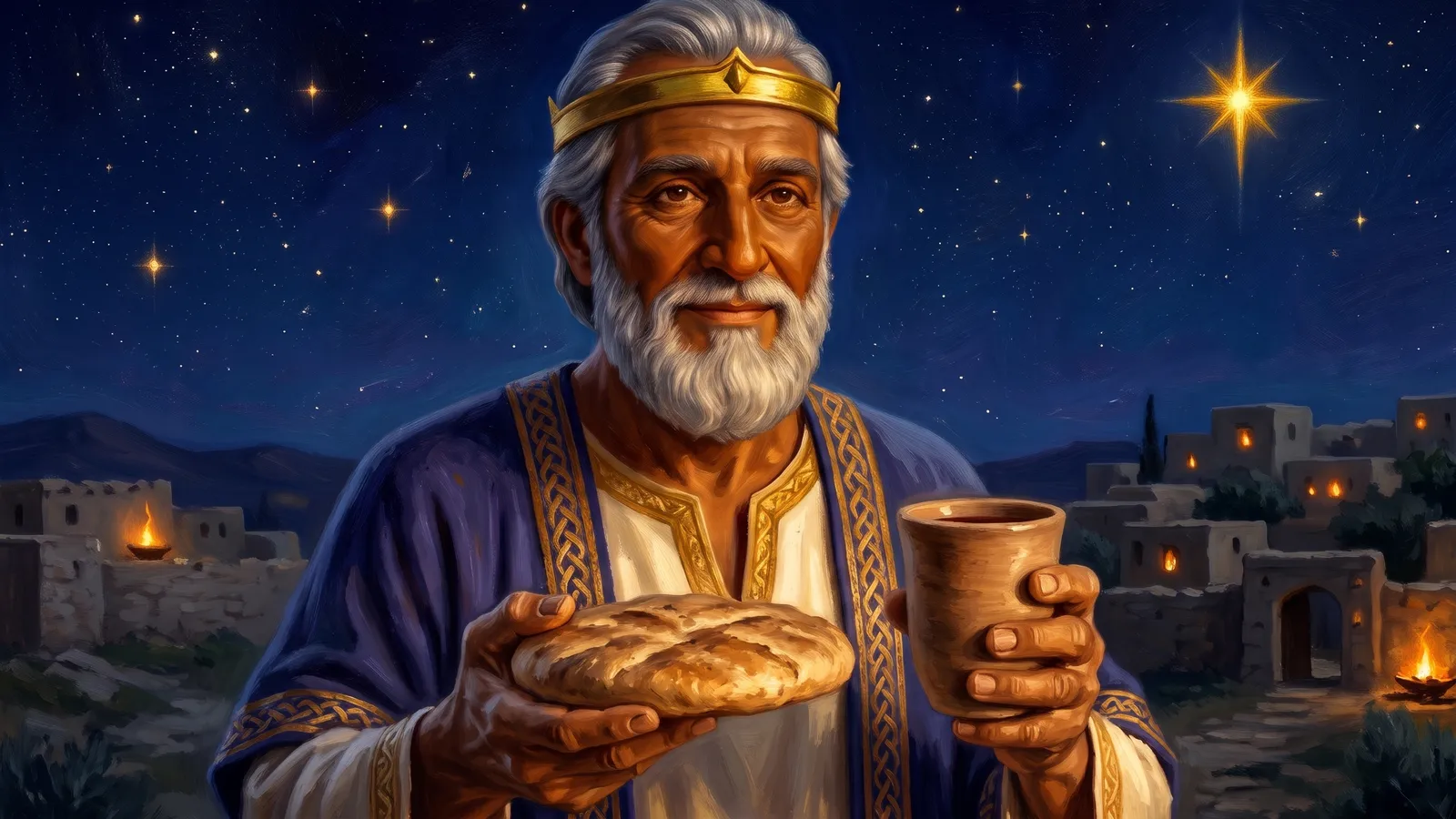
Some interpret this as hospitality and refreshment for Abraham and his men following battle. Others see a symbolic connection to the Lord's Supper, which Jesus would later establish.
Consider the connection.
- Melchizedek brought bread and wine.
- Jesus used bread and wine when establishing the New Covenant.
- Jesus is identified as the eternal High Priest in Hebrews.
It is an interesting biblical connection, but we must be careful not to claim Genesis explicitly identifies Melchizedek's bread and wine as a prophetic reference to communion. The symbolism is worth considering, even though the text does not explain it.
6David Prophesies About Melchizedek
Primary Scripture: Psalm 110:1-4
Hundreds of years after Abraham's encounter with Melchizedek, King David writes something extraordinary.
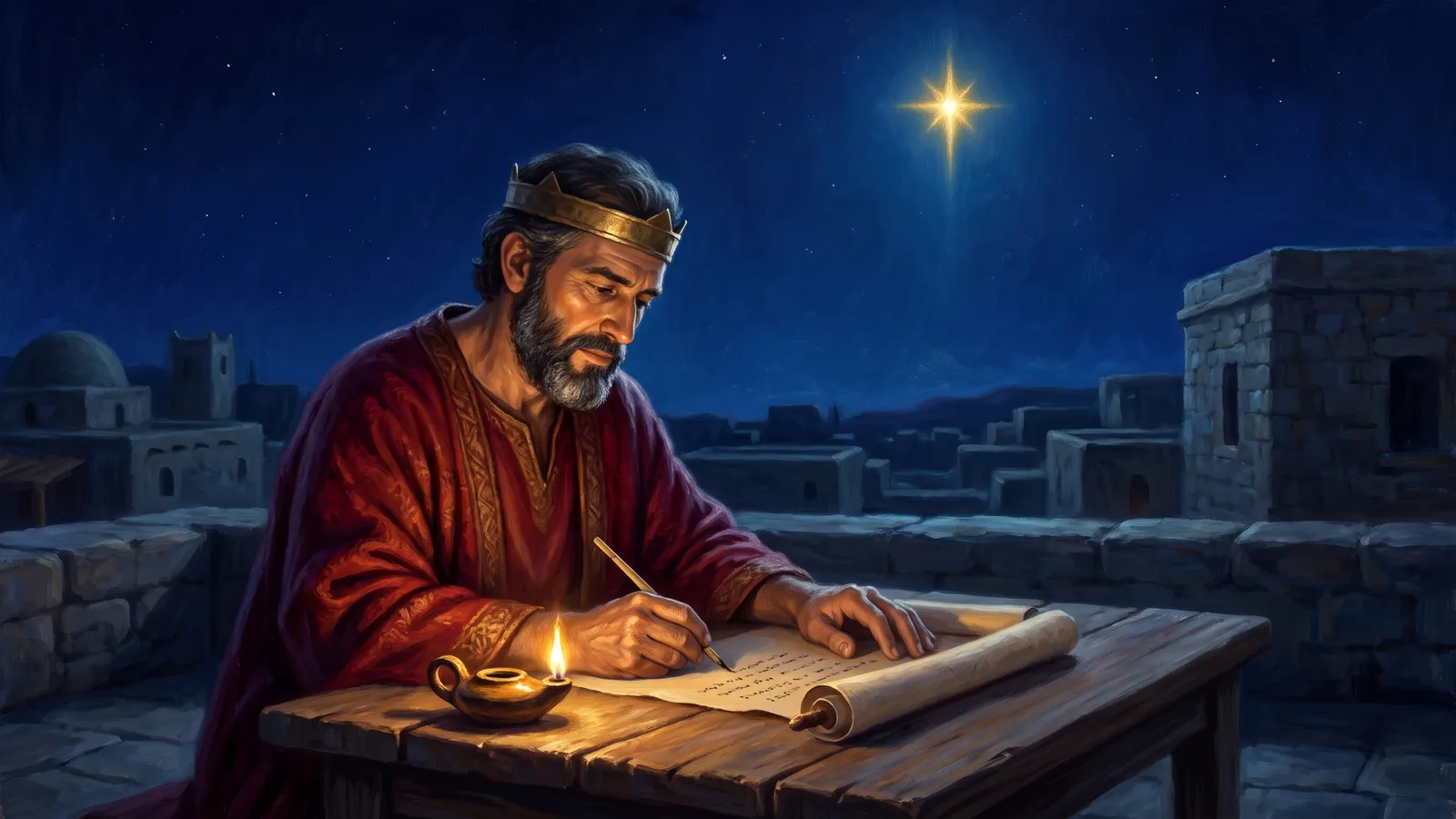
The LORD hath sworn, and will not repent, Thou art a priest for ever after the order of Melchizedek.
Psalm 110:4, KJV
This is one of the most important Old Testament references to Melchizedek. David is speaking prophetically about a coming priest whose priesthood will last forever.
Under the Law of Moses, priests came from the tribe of Levi. Their priesthood was passed down through generations. But Psalm 110 describes a priesthood that is different.
- It is established by God's oath.
- It is not based on Levitical ancestry.
- It lasts forever.
- It points to the coming Messiah.
This prophecy becomes central to understanding Jesus Christ.
7Jesus Christ: The Eternal High Priest
Primary Scripture: Hebrews 5:5-10 and Hebrews 7:20-28
The book of Hebrews makes the connection between Melchizedek and Jesus unmistakable.
Jesus did not become High Priest because He belonged to the tribe of Levi. Hebrews 7:14 explains that Jesus came from the tribe of Judah, a tribe concerning which Moses said nothing about priesthood.
So how could Jesus be a priest? Because His priesthood belongs to a different order.
Thou art a priest for ever after the order of Melchisedec.
Hebrews 7:17, KJV
Jesus is not a temporary priest. The Levitical priests died and had to be replaced. Jesus lives forever. Hebrews 7:24-25 teaches that His priesthood is permanent and that He is able to save completely those who come to God through Him.
This is the heart of the message. Melchizedek's appearance in Genesis gives us a glimpse of a priesthood that would ultimately find its fulfillment in Jesus Christ, the King of Kings and Lord of Lords.
8Why Was Melchizedek Greater Than Abraham in Hebrews?
Primary Scripture: Hebrews 7:4-10
The writer of Hebrews makes a point that might surprise some readers. Abraham was the patriarch of Israel. He was the man God called, blessed, and promised to make a great nation. Yet Abraham gave a tenth to Melchizedek.
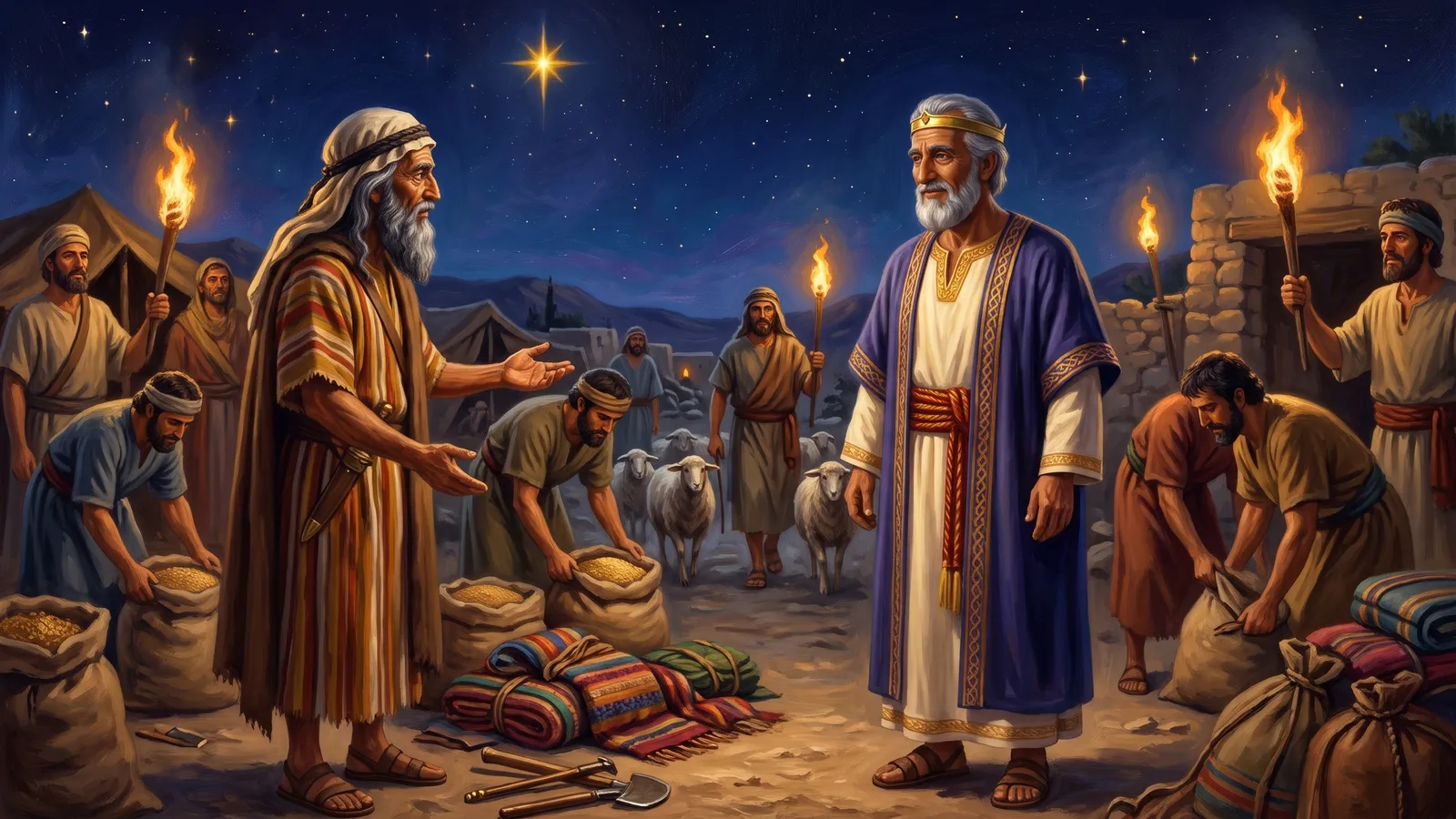
The writer explains that this demonstrates Melchizedek's superior position in the encounter.
He also makes an interesting argument concerning Levi. Levi was Abraham's descendant. Hebrews reasons that, in a representative sense, Levi also paid tithes through Abraham when Abraham gave a tenth to Melchizedek. This is not saying Levi was physically present at the meeting. It is a theological argument about ancestry and representation.
The point is that the priesthood associated with Melchizedek is greater than the Levitical priesthood. And Jesus, who serves in that order, possesses a priesthood that never ends.
9What Happened to Melchizedek?
This is where the mystery remains. The Bible never tells us.
- Where Melchizedek was born.
- Who his parents were.
- How old he was.
- How long he ruled Salem.
- How he died.
- Where he was buried.
Genesis introduces him, records his encounter with Abraham, and then moves on. The silence is significant because Hebrews uses his scriptural presentation to teach about an eternal priesthood.
There are ancient Jewish and other extra-biblical traditions that discuss Melchizedek, but they are not part of the biblical account and should not be treated as established historical fact. We must be careful not to fill in the blanks with stories that Scripture never confirms.
10The Spiritual Lessons of Melchizedek
Melchizedek's story is brief, but its significance reaches throughout the Bible. Five lessons:
- God has always had a plan.Long before the Law of Moses, God had a priest serving Him outside the Levitical system.
- Righteousness and peace belong together.Melchizedek's titles point to two characteristics that are perfectly fulfilled in Christ.
- All victory belongs to God.Melchizedek recognized God as the One who delivered Abraham's enemies into his hands.
- Jesus is greater than every earthly priest.Earthly priests were temporary. Jesus lives forever and continually intercedes for His people.
- Not everything God reveals is explained immediately.Melchizedek appears briefly in Genesis, but his significance becomes clearer through David's prophecy and the book of Hebrews.
Sometimes a passage that seems small when first encountered becomes one of the most important pieces of understanding the entire biblical story.
11Scripture References for Further Study
| Scripture | What it reveals |
|---|---|
| Genesis 14:17-20 | Melchizedek meets Abraham |
| Psalm 110:1-4 | Prophecy of an eternal priest |
| Hebrews 5:5-10 | Jesus appointed High Priest |
| Hebrews 6:19-20 | Jesus enters as our forerunner |
| Hebrews 7:1-3 | Melchizedek's identity and titles |
| Hebrews 7:4-10 | Melchizedek and Abraham |
| Hebrews 7:11-17 | A different order of priesthood |
| Hebrews 7:20-28 | Christ's everlasting priesthood |
Around the table
12Questions for Personal Reflection and Group Discussion
- 1.Why do you think God introduced Melchizedek before establishing the Levitical priesthood?
- 2.What is the significance of Abraham giving a tenth to Melchizedek?
- 3.Why does Hebrews emphasize that Melchizedek has no recorded genealogy?
- 4.Do you believe Melchizedek was a historical foreshadowing of Jesus, or do you see another possibility? What Scriptures support your position?
- 5.What does it mean to you personally that Jesus is our eternal High Priest?
- 6.How does understanding Melchizedek help you better understand the book of Hebrews?
Conclusion: A Priesthood That Would Never End
Melchizedek is one of the most fascinating figures in the Old Testament. He appears in a moment of history, blesses Abraham, receives his tithe, and disappears from the narrative. Yet his name would be carried through the generations, appearing again in the Psalms and becoming a central part of the message of Hebrews.
His story reminds us that God's plan was never limited to what people could see or understand at the time. Abraham encountered a king and priest whose significance would not be fully understood until the coming of Jesus Christ.
Melchizedek's priesthood points us toward something greater than an earthly throne, a temporary kingdom, or a priest who eventually dies. It points us toward Jesus Christ.
Earthly priests passed away. Earthly kings lost their kingdoms. But Jesus Christ remains forever.
Wherefore he is able also to save them to the uttermost that come unto God by him, seeing he ever liveth to make intercession for them.
Hebrews 7:25, KJV
That is the greatest truth behind the mystery of Melchizedek. The man in Genesis was only a glimpse. Jesus Christ is the fulfillment.
A Final Thought
There are mysteries in the Bible that God does not fully explain in the passage where they first appear. Melchizedek is one of them. But when we follow his story from Genesis to Psalms and finally to Hebrews, we discover that the mystery was pointing us toward the eternal priesthood of Jesus Christ.
The question is not simply who Melchizedek was, but what God was revealing through him.